You’d be forgiven for thinking that, after dying, there were
only a few things that might happen to your cadaver; it could decay in a box
six feet under, get burnt and scattered somewhere you loved, or (if you’re a
shut-in like me) it could lie undiscovered in your flat for months, providing
nourishment for your hungry cats. It turns out that your vacated body has far
more options than that. Stiff takes us through the many and varied career
options for cadavers, as well as some of those that are thankfully no longer in
vogue, in a funny and informative book that gave me plenty of fuel for thought.
Whether it be providing a practical opportunity for surgeons
to practice their skills, helping the field of criminal forensics perfect
methods of detection and investigation, providing realistic but unfeeling test
dummies for safety measures – whether in cars or for troops in battle – or even
as human compost, there’s a whole world of good that can be done with your body
once you’re no longer using it. There’s also no end of disturbing things that
used to be done (and some that still are) such as the examples in the crucifixion
experiments, the corpse as medicine, and reanimation.
As for me, I’ve never particularly cared what happened once
I’m dead, but having now been given a few options other than the traditional I’ve
changed my mind. Much as I wouldn’t torch a house that I’d moved out of so that
others could get some use out of it, I now feel the same way about my body. I’ve
long been on the Organ Donor Register (if anything’s still working, have at it)
and I now quite fancy the idea of advancing the scientific cause in other ways –if
I had my way I’d be one of those empty shells lying on a hillside somewhere as
scientists check my larvae levels in the hopes an accurate time of death would
catch a future psycho. Failing that, I’d also be happy with a spot of human
composting, providing fertile ground for some lovely plants to grow from.
If you’re the sort of person who finds phrases like larvae
levels and skin slippage stomach-churning you might have a harder time reading
this than I did (considering that I’ll vomit if I so much as touch butter, I
have a surprisingly strong stomach when it comes to this sort of material), but
I guarantee you’ll come away with enough food for thought of your own to make
it worthwhile.
4 stars Not many series, especially those set in the paranormal realm, manage to get 15 books in without showing signs of bloat, slump, or the author no longer feeling any enthusiasm for their creation (as in the case of the terminal decline of the Sookie Stackhouse books). As tall as he is, Skin Game sees Harry Dresden still standing head and shoulders above his contemporaries as we tear through the latest breakneck instalment in the continued development of my favourite wizard-for-hire. Following the events of Cold Days Harry has spent a long time recovering on his island with just Mab, Demonreach itself, and the parasite that's soon due to burst from his head to keep him company. But not for long, as Mab has loaned Harry out for a job - a particularly awkward one, seeing as Harry will be working for one of his nemeses, the bastardly Denarian Nicodemus Archleone. Archleone has assembled a motley crew of supernatural types (including a not very friendly Yeti) for the heist of the century - he doesn't want to break into any old vault but one belonging to Hades, down in the Underworld.
Butcher yet again does a great job in raising the stakes for Harry while at the same time avoiding one of the more common missteps in the supernatural; while Harry is no longer just a wizard-for-hire but also a Warden of the White Council and Winter Knight, that doesn't mean that he's now nigh invincible and possessing every power imaginable (*cough* Anita Blake *cough*). Instead each new job has brought a different set of responsibilities, a new set of restrictions, and a new set of challenges (especially in the case of negotiating the moral pitfalls of being the Winter Knight).
Keeping us in touch with the human world are the friends Harry calls in to help - good old Murphy who's always got his back, Michael Carpenter, getting a last hurrah as a Knight of the Cross while also raising Harry's cute-as-a-button daughter Maggie (whose moments, along with Mouse, made it a little hard to swallow past the lump in my throat) and, most effectively, Waldo Butters who proves that you don't have to be the smartest, the strongest, or the most fearless to be a total hero.
While I may have missed not having Toot, Thomas or Bob (except in a small but great cameo), these were minor niggles easily cancelled out by my glee at Harry's new habit of shouting 'Parkour!' every time he moves (as someone who shouts similar at minor movements like getting off the sofa, I wholeheartedly approve) with my biggest niggle being that I'm now up to date with the series, and am going to have to actually wait for the next to be written. Dagnammit!
Wizard is the extremely comprehensive biography of possibly one of the most interesting
men to have ever lived, a man so cool they had to get David Bowie to play him –
Nikola Tesla.
Before we
begin, I should probably make it clear that while I am fascinated by science
and the great thinkers that practice it, my mind does not work in that way at
all (I only passed my Science GCSE after my mum condensed pretty much the
entire syllabus into a series of silly cartoons a few days before my exams) and
so the title of this book is made even more appropriate. My only real
understanding of electricity being that when I flip a switch, my lights come on
(when the bulbs haven't gone), it really may as well be magic as far as I'm
concerned.
So, Nikola Tesla...
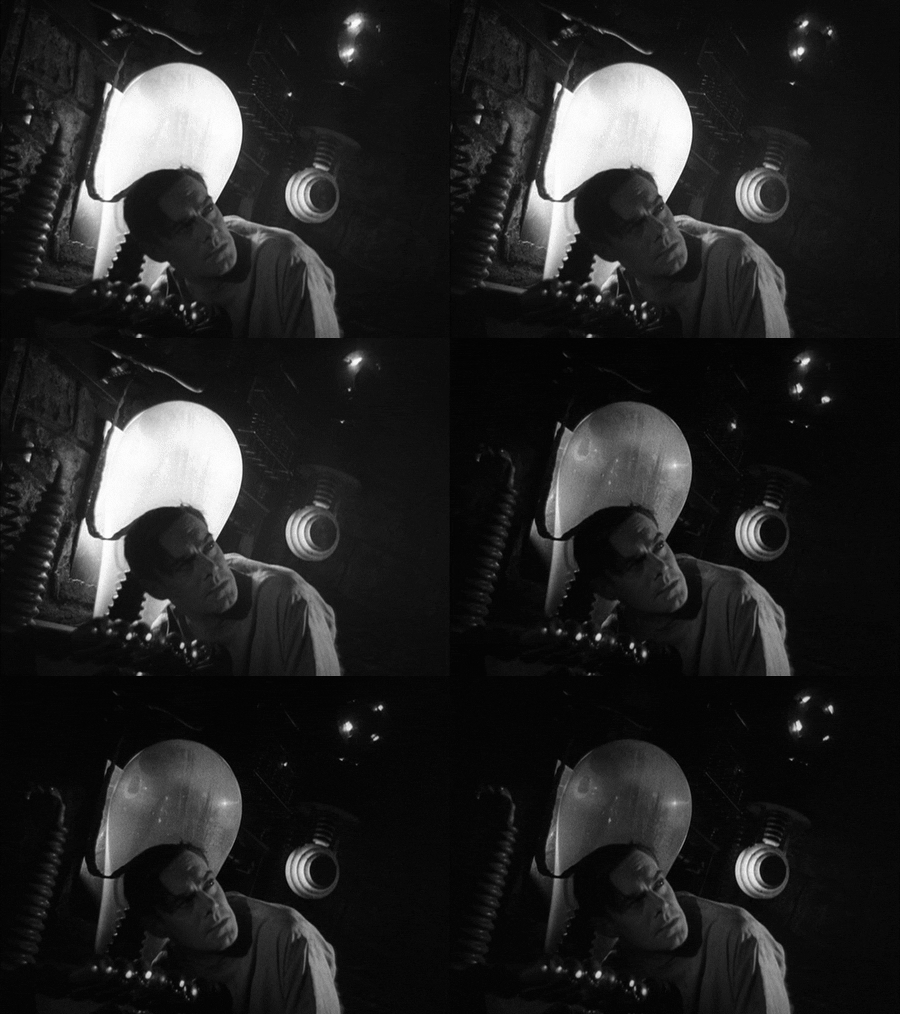
Look at him. See? Told you he was cool.
A genius
with a talent for invention as well as for winding up his investors and a
great showman whose incredible lightning spewing demonstrations would capture
the public imagination before his grandiose pronouncements and appetite for
self-publicity saw him later dismissed as something of a crank unable to finish
a project, Tesla would invent many of the things we take for granted in the
modern world whilst also contributing to many more. He would also be eternally screwed
over and in debt, his work credited to and making others rich, his achievements
only properly recognised long after his death.
Born in
Smiljan in 1856 to a gifted family (particularly his mum, who was forever
inventing new household appliances for herself) and possessing a photographic
memory, Tesla was already far more accomplished by the time he'd left University
than most of us could hope to be in a lifetime, having taken courses in
arithmetic and analytical geometry, theoretical and experimental physics,
integral calculus, analytical chemistry, mineralogy, machinery construction,
botany, wave theory, optics, philosophy and higher maths, and speaking 8
languages. He’d also survived several near death experiences including plunging
into boiling milk, drowning under a raft, being swept over waterfall,
contracting cholera, and driving himself through overwork into a nervous
collapse – something he would continue to do throughout his lifetime as he
subsisted on bread and milk, sleeping only a few hours a night and pouring all
of his energies into his work.
Moving to the US in 1884 to work
for Thomas Edison’s company, Tesla would set out on his own after almost
immediately receiving the first of many shaftings at Edison’s hands – being
paid just $18 a day to redesign and reassemble much of the company’s equipment
after having been promised $50,000. These shaftings would also continue
throughout his life, and were as many and varied as his astounding array of
inventions (which included an induction motor, electrical power distribution
system, fluorescent and neon lights, wireless telecommunication, remote
control, robotics and apparently even fricking laser beams) and came at the
hands of not just Edison but the likes of Marconi, Westinghouse, Pupin, Steinmetz,
JP Morgan and the US Government.
Facing a
publicity backlash due to Edison’s dickish publicity campaign in which he
electrocuted animals with Tesla’s competing AC system, mired in patent
infringements and court battles, and forever toadying up to potential investors
(mostly unsuccessfully, thanks to his habit of sending long letters bemoaning
his hard luck and full of emotional blackmail, while asking for way more funds
having abandoned agreed plans in favour of altogether grander schemes), Tesla would
become far more paranoid, bitter and reclusive over time, allowing the weirder
aspects of his personality free reign.
Amongst his many peculiarities
were: an aversion to women's earrings and touching people’s hair, being sent
into fits at the sight of pearls and fevers at the sight of a peach, insisting
on living in hotels despite an almost pathological inability to pay his rent,
where his mirrors must be draped and no sunlight must enter his room. And
despite being a favourite of the ladies (especially of his friend’s wife, Mrs
Katherine Johnson), he remained celibate – having eyes only for his work and,
well, I’ll let him tell you:
“I have been feeding pigeons, thousands of them
for years. But there was one, a beautiful bird, pure white with light grey tips
on its wings; that one was different. It was a female. I had only to wish and
call her and she would come flying to me. I loved that pigeon as a man loves a
woman, and she loved me. As long as I had her, my life had purpose."
Tesla
passed away at the age of 86, having outlived his pigeon, sending various
secret agencies into frenzies as they tried to suppress his papers and get
their hands on a rumoured death ray machine, Tesla having supposedly left a
working model in a hotel basement in lieu of rent.
As a reading experience, due to
the staggering amount of information imparted I sometimes struggled with Wizard
- especially as much of it was highly technical information. This, coupled with
the authors insistence on flying off on tangents and flitting around in time,
meant that I often spent entire chunks completely befuddled and bewildered. But
I still learned everything I could possibly want to know about one of the most
interesting people to have ever lived, so I'm not going to hold too much
against it.
And in case you're wondering, I'm firmly on the Tesla side of this rap battle:
Red Seas Under Red Skies is the 2nd in the Gentleman Bastards sequence, and
while the shine hasn't quite worn off yet - this is almost as good as its
predecessor - I'm not quite slipping into complete squealing fandom yet
either.
Catching up with the remaining Bastards as they try to
recover from the horrific outcome of The Lies of Locke Lamora the only way they
know how, Red Seas... finds Locke and Jean putting into place an elaborate
scheme to rob the greatest gaming-house in Tal Verrar: The Sinspire. But as tends to
happen with plans, more than one spanner is thrown into the works - the
Bondsmagi are pissed about what happened to the Falconer, assassins keep trying
to murder them and now the Archon (sort of the Julius Caesar of Tal Verrar) has decided that they'd do nicely for a job he has in mind. Which is how they
find themselves at sea, surrounded by pirates.
I enjoyed spending time in a different place to the one we'd initially been
introduced in Lies..., which helped add to the different feel of this book and
the switch to being a naval adventure rather than a heist also worked for me,
especially as it gave me two new characters to really get behind (Captain
Drakasha and Ezri, the two kick ass women who show the Bastards how much better
than them they are at pirating). The dialogue sparkled as much as ever, and
more of a focus on Jean was also welcome (as he's my favourite).
However, this time around the beginning of the book suffered from several
lulls and didn't really take off for me until we got onto the ocean waves, the
'villains' of the piece (or the marks, at least) - Requin of the Sinspire and
the Archon - were nowhere as formidable, charismatic or plain entertaining as
Barsavi and the Gray King, and a couple of the reveals towards the end felt rushed or a little forced.
Don't get me wrong - I still really enjoyed Red Seas... and I'm
sure I'll enjoy the hell out of the rest of the series. It's just not yet had
that magic ingredient that really makes me lose it. Fingers crossed that's just
because it's waiting for me in the next one.
2.5 stars We've reached the 12th in the Discworld series, and we're in the company of the witches
as they head on a road trip to Genua to stop a wedding being forced upon a
princess by someone who's twisting stories to suit their own purposes (and taking on riverboat gamblers, vampires and lots of banana daiquiris along the way).
My journey through the Discworld to date has been a bit bumpy, with as many
lows as there have been highs. This one was more of a middling entry come the
end - the road trip itself, which spent far too much time piddling around,
really dragged for me with most of the jokes falling as flat as Granny's
running bungled alligator joke.
While things did pick up once we'd reached
Genua (with Greebo's transformation being a particular high point) it wasn't
enough to make me sorry to see it end.
I really want to like these books more than I have so far (except for when it comes to Death and the City Watch), but entries like this aren't helping.
Telling the non-chronological tale of Rudy Waltz, who is given his titular
nickname at 12 years old when he becomes a double-murderer, Deadeye Dick is both
an illustration of life being nothing but a series of mistakes and accidents and, in
the same week that an American child has accidentally killed a gun instructor
while handling a sub-machine gun, a powerful argument for gun control.
Never quite sparkling as brilliantly as Breakfast of Champions,
Slaughterhouse 5 or Sirens of Titan, there are still enough flashes its wry
observations to make sure that while its
subject matter may be depressing, reading it isn't.
Rainbow Rowell first made me wibble with Eleanor and Park. Fangirl has just
proved that wasn't a fluke.
A fan of the Harry Potter-like Simon Snow, Cath is just starting out at
college. Anxious and insecure, she's away from the father she's taken care of
since her mother left and her identical twin, Wren, has decided she doesn't want
to room with her. Left with an intimidating roommate, Reagan, whose easygoing
boyfriend Levi is always in their room even when Reagan's not, Cath isn't
getting to spend as much time as she'd like on her fanfiction (the fans of which do not include her Fiction Writing professor, who thinks it's for bottom-feeders).
And so Cath is slowly drawn out
of the comfortable worlds, both real and imaginary, that she ordinarily
inhabits.
At first my stratospheric expectations following Eleanor and Park worked
unfairly against this, and I was all set to find Cath irritating (especially early on whenever exhibiting any of the traits I have in common with her) but by the time
the wonderful Reagan (who I have a total girlcrush on, by the way) had decided
to be Cath's new best friend I was won over (and then totally pushed off into
the wibbles by the time Levi started yelling at her stories).
It's rare that I find books with romances at their centres so engrossing,
but something about the way Rowell writes about falling in love for the first
time hits me in my squishy place Every. Damn. Time.
I'm going to make sure I have some on back-up for whenever I need to
sigh wistfully for a while.